
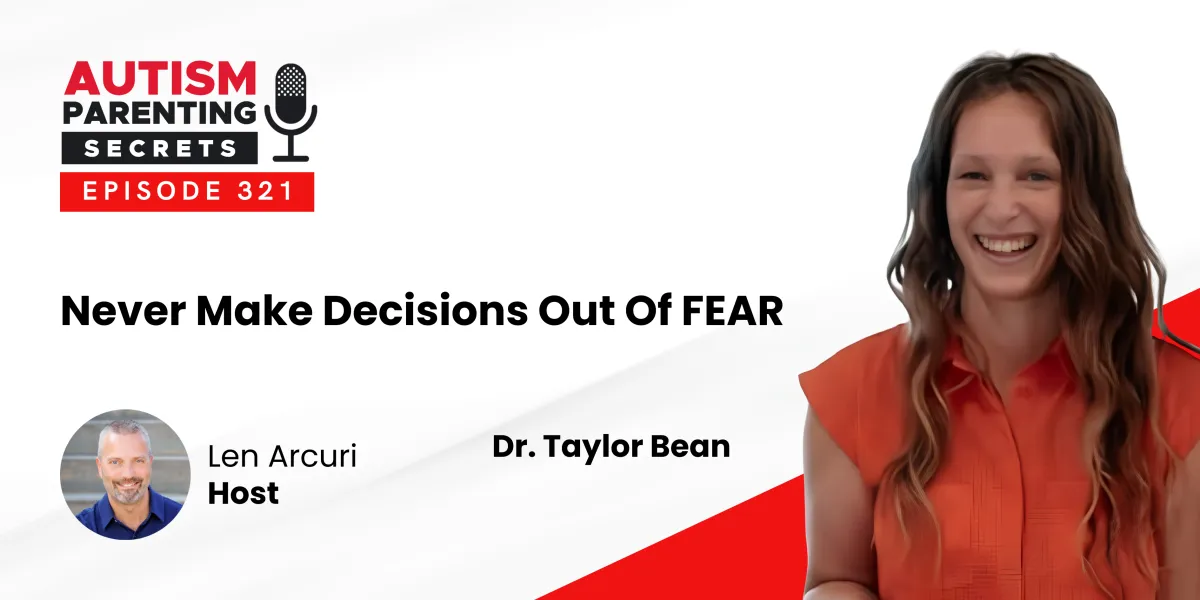
Episode 321 — Never Make Decisions Out Of FEAR
Guest: Dr. Taylor Bean • Date: August 24, 2026
Episode Overview
Dr. Taylor Bean joins us to explore what informed decision-making really looks like when it comes to your child's health. We cover immune health, food introduction, genetics, Vitamin A, homeopathy, fever, vaccine optimization, and why understanding your options matters more than simply being told what to do.
About Dr. Taylor Bean
Dr. Taylor Bean is a Naturopathic Doctor and owner of TaylorMade Wellness in Salmon Arm, British Columbia.
Becoming a mother is where her core value of achieving informed consent was born. While her profession taught her to be curious and treat each patient individually, it was her positive birthing experiences that changed her perspective on what a true doctor-patient relationship means.
Her career started in Singapore, where she supported patients throughout Southeast Asia. She has been supporting Canadian families since 2016.
You’ll Discover
Why informed consent became foundational to Dr. Bean's work (3:15)
Why MTHFR isn't the whole story when considering inflammatory response (15:50)
Why Vitamin A plays such an important role in Dr. Bean's approach (19:32)
How being prepared can reduce fear when your child gets sick (27:47)
Why so many parents are stuck in the vaccine "gray zone" (40:44)
Full Transcript
Dr. Taylor Bean 0:00
I have found that 80% of my patients are in the gray zone. They're in this curious, confused, scared sector, and those are the people that I want to help. Those are the people because you go to the internet today is worse than ever before. But if you go to the internet and you post a question. You're going to just get hammered with either either side of the conversation, but you're just wanting information. You want information. Don't tell me what to do because you go to your pediatrician. They'll tell you what to do, and no one wants to be told what to do anymore. It's more of I want to make the decision on my own, but I want to get to the point that I know why I'm making that decision.
Len Arcuri 0:44
If you're a parent of a child with autism, you are being called to rise with love, courage, and clarity. This journey isn't easy, and most parents aren't equipped, but you can be. This podcast is your invitation to rise higher, because how you navigate matters. I'm Len, and this is Autism Parenting Secrets, where you become the parent your child needs now. Welcome to Autism Parenting Secrets. One of the greatest challenges parents face isn't simply making difficult health decisions; it's making those decisions when they're surrounded by conflicting opinions, uncertainty, and fear, and when the stakes feel incredibly high, it's easy to react emotionally instead of thinking clearly. And my guest this week is Dr. Taylor Bean, a naturopathic doctor and MAPS fellow who is passionate about helping parents navigate complex medical decisions with confidence. Her work spans pediatric wellness, genetics, immune health, neuroinflammation, nutritional medicine, and vaccine education. And throughout all, she encourages parents to ask better questions, to understand their options, and make more informed decisions that are right for their own unique child. The secret this week is never make decisions out of fear. Welcome, Dr. Bean.
Dr. Taylor Bean 2:05
Oh, thank you for having me. This is great to be here.
Len Arcuri 2:07
Wonderful. I'm I'm I'm excited to talk and to dive in. I know there's a lot that's packed into that secret, right? In terms of parents and decision making, and and there's a lot of forces working against parents as they're trying to make good decisions, and the overwhelm of conflicting information can definitely be very real. I know I felt that. So, as you're thinking about in terms of how you support parents uniquely, tell me what you think is something that a parent would really benefit from understanding earlier in this journey, if their their child was just diagnosed, whatever it might be, what what do you see as something that parents would really benefit from knowing earlier in the journey?
Dr. Taylor Bean 2:50
Early in the journey is well, pregnancy is really early in the journey, and when I'm working with parents and be it preconception, getting mom and dad healthy at the beginning, particular nutrients through pregnancy, and asking those questions of what their birth plan is. As a mom, my basically my journey began working with children as by way of becoming a mother, but my true informed consent, understanding that began when I gave birth, and not even when I was pregnant, but when I gave birth, and so, and that has actually been the foundation of, as it should for any practitioner. But it really struck my heart chords around informed consent after I gave birth, and my own mandate within my practice of what that really means for parents, asking just asking questions and being okay with asking questions, but that birthing experience and if we're that can really take off our relationship with ourselves and with our children, and knowing your choices of what your birthing choices can be, and that might be home, hospital, but hospital even birthing positions that you can be in to optimize that birthing experience. So, be it we can perhaps birth naturally if that's what our goal is, and if we have a C-section, you know things that support our child's immune system right off the right off the go, so that's where I you know start. If I have a parent that's in preconception phase, and then we get to talk about the birthing, and then that first year of life for children is for me is really grounding their microbial strength, and a lot of people don't know is the first two years of life. The is where we have our imprinting of whatever our children are exposed to. That is what will be colonized, and so yes, breastfeeding if we can. For mom to take probiotics, but then we can even give probiotics, even spores, to our our babies and then to our toddlers, and then nutrition comes in. So even food introduction at six months is something that I talk a lot about with parents. And what's been happening is early introduction of potential allergens, which are going to be hard proteins that we're introducing, and frankly, too soon. What's interesting about infants is that they have a very tough time digesting proteins. the The stomach acid we need in order to break down those proteins is very low in an infant, so what we're seeing is a lot of influential social media folk that are sharing that they're starting their children off on you know meat, eggs, peanut butter, be it for their gut and also to reduce allergies. So there's two different things that's happening here. For the allergy component, for me, it's always as a natural fact doctor to look at the cause, and the cause of allergies is not because we withheld these foods for our children. That we withheld peanuts, we withheld eggs too too long. They have exposure. Now the WHO spent a lot of money to prove that giving these foods early is going to help with reduction of allergens, and it it did show that it did show. But the problem is, is that these are foods that are hard to digest. Is number two. So what's interesting with breast milk is those babies are going to get exposure to those food proteins via breast milk in the beginning anyway, and so giving those foods a little bit later is not going to increase allergies, but in fact help with gut digestion, stomach acid, and digestive enzymes come in later after one at a at a volume that which that child can digest those proteins. A third part is that our key microbial species cannot digest protein; they can't. They ferment fruits and veggies. That's what they ferment, so they produce what's called short chain fatty acids, and those are really important for the immune system of the gut. So we, in terms of food introduction for families, I give them a handout on this, but we're going to start on easily digestible foods. Foods before one is fun, and we're doing that to preserve their keystone species in the gut. We're not entering hard proteins, so they have to digest them because then that could be a problem in itself. And we don't need to be hurrying and giving peanut butter as the first thing that child receives.
Dr. Taylor Bean 7:58
Also, we can wait to introduce those things, and if we do it in small micro bits, even by one, we can do that. Allergies has increased, and and the allergy front, we look at the what are allergies, and what is eczema, and what is asthma, and what do they all have related to each other, and we have these two prongs of the immune system. We have what's called th one and th two. And when I talk to parents about food introduction and even vaccination, we want to talk about immunity. This all ties in together. So what's interesting is an infant is born being able to make immunity to food proteins, so you think of whatever mama eats. It's be it's peanuts and it's gluten and it's dairy, what have you. Those food proteins go through the milk, and that baby receives that, and the body sees that and starts to make memory to that. The baby is able to make memory to food proteins. It's memorizing self from non-self, so that when those foods enter the mouth, it's not brand new. They've seen it before, but again, we're waiting to enter those foods because of the digestive tract and inability to digest those things. Well, is why we're waiting, not for the allergy piece. Infants, in order to make immunity to viruses and bacteria, the natural ability to be able to do that doesn't start to happen until around nine to 12 months, so there's a delay aspect here, and there's a reason why there's a delay aspect. So an infant is born again, being able to make memory to to food proteins. In addition, the baby is creating and surging an interleukin called IL four, IL four is surging through its body. IL four's purpose is actually to help with with brain memory and cognition is the point of it, and in doing so, it actually blocks TH one, the side of the immune system required to make memory to viruses and bacteria. So a. Locked-in aspect to the immune system of an infant is it blocks Th1 while it's allowing for Th2 completely on board to make memory to its environment to food proteins that which it receives from mom. Now, as food introduces around that six months and be it breastfeeding is reducing, there is a shift that starts happening, teach one starts to be to come in. Interleukin four reduces, and teach one, as it's shown in terms of ability to make memory to viruses and bacteria, seroconversion happens around that nine to 12 month window. So making memory to viruses and bacteria is really inflammatory, so there's this locked-in teach two heightened type of immune system where we're suppressing teach one. Now, to the eczema, allergies, and asthma is that's a that's a teach two dominant situation. So teach two has been more heightened for a longer period of time. Now we insert vaccines in which, depending where you live in the world, you may do vaccines at birth, but typically we start at two months. So we start at two months, and four months, and six months, and then 12, and then be at some places we'll do 15 months or 18 months after that. So what vaccines are doing is there to heighten a teach one response, and so in order to do that, we need to use aluminum, which is an adjuvant in those vaccines because those are dead antigens, and so we need something to stimulate the immune system. So aluminum is used to stimulate the immune system, innate immune system to respond, and then those innate immune cells, which are called dendritic cells, will then take that antigen, which is bound to aluminum, and then bring it to our B and T cells to make memory. Now, at two months, there's really there's really nothing in terms of antibodies that are created by four months to repeat what we just did, and there is going to be some antibodies. And then at six months, we'll have a higher surge of antibodies. Now, what's interesting is that vaccines are going to stimulate that teach one response, but in terms of unintended consequence for potentially later on, is there be a continued surge of teach too, which what can happen.
Dr. Taylor Bean 12:22
So then we have this imbalance then that's happening potentially because some bodies are going to be responding more inflammatory than other bodies, and that's where you get into the epigenetic piece of how that body responds, and so it can be more inflammatory. So when we don't know whom that may be, and sort of that stacking that can happen in terms of if if we have a baby, mom is stressed and happening through pregnancy, and then we have a C-section, and then we have antibiotics, and then we are not breastfeeding. These are sort of stacking components of that would have been anti-inflammatory, but instead, then we do it 246, more inflammatory, and so we have more of a teach-to potential picture that may develop, and so we know that allergies, eczema, and atopic dermatitis are more teach-to-dominant conditions, and so at MAPS this coming September, I'm talking about LDN, low dose naltrexone, and LDN has been an incredible medication that I've been using in my practice to alter that TH two presentation, and so I'm using it more so from that eczema, not so much for allergies and asthma, but more so from eczema, and so in due time, and be it we're going to grow out of our maybe our allergies, are we going to grow out of our asthma? Those do seem to lessen and not as severe as the year or two goes on by way of using LDM more so for the eczema. But the reason I use for eczema is because it's TH two dominant condition. So when I'm working with families, I am I am strategically talking to them about labor, pregnancy, labor, food introduction, child in terms of good keystone species that they should get within their first or two years of life, and then we have a discussion around vaccines in terms of immune activation and what that could mean for their kiddo. Can we do some testing potentially to see if they are more primed to be more inflamed? The thing is, if you're going to be more inflamed to vaccines, you're going to be more inflamed to trauma, surgery, car accident, to anything that's inflammatory. For some people, like I don't understand why I can't heal after X, or I'm in so much pain after I do X, and it's like you might be more praying to be more inflamed after that as a result of your epigenetics. So then knowing that to me is then we can use that as a tool for solutions of how can we mitigate. That inflammatory response, and we can with certain items, be it surround your vaccines or pre-post surgery, or someone has had a motor vehicle accident, then things that I'm using for them as a result of that. So that was quite a lot to share, but it's just sort of my where my I look at sort of the if I have some in the very beginning, or I have some in the middle, or someone at the end. But if you're looking to have another kiddo, maybe some differences that you would think about for your next baby, and why you're you're considering. Because even to the probiotic piece, some people think, okay, well, they're just a waste. I shouldn't bother. But it's actually they're the most important in the first two years of life. That exposure to those specific species will help colonize. That exposure is important, is why. And so I we start with probiotics right off the bat with all kiddos, certain brands, and and then we we will graduate to other ones with other species as they age, and then we'll use spores as well. We'll sprinkle in the spores as well because spores are modulators. They feed what should be there and they remove what should not be there. So they're really fascinating in that piece, and we can give them to our children too. It's kind of like a biohacking piece.
Len Arcuri 16:19
Yeah, no, I I know you've covered a lot of ground, and I'm tracking with you a lot of areas. We can maybe dive a little bit deeper, but I think one question that people might have in their mind is, okay, let's say a parent does sense that their child might be more sensitive, more more compromised, perhaps. And you mentioned the idea of maybe doing some testing, right, to be able to determine, you know what might make sense and maybe what to avoid. When you talk about testing, my guess is that's going to include like functional genomic testing, right? Of the of the blueprint, along with maybe specific, you know, blood, urine, stool testing, perhaps.
Dr. Taylor Bean 16:56
When it comes to an infant, and it would be epigenetic testing, and be it that would be a buccal swab is what would be in terms of an infant. I don't do too much in terms of stool testing, organic acid testing in an infant. After age one, we might consider because after age one, we kind of have be it a better idea of our kiddo, and so maybe this child has had severe diarrhea or has had digestive issues already from you know a few months. Then considering doing a comprehensive stool test, and and so it would be later. But in the beginning, for Intel, and I have tested the parents. It's hard. It's really hard to be able to test parents to know what the kiddo will be, unless both parents are going to be like homozygous and something both. Then you're like, okay, we have a good idea of what this child will be. But if we have heterozygous in both, we don't know what the matching will be in that kiddo. But we have done that to sort of try to get an idea of what that kiddo and there's other things that we can we can look at too, be at the ability to convert beta carotene into retinol, or we can look at other pathways of making glutathione. You know, we do look at MTHFR, but when it comes to vaccines, MTHFR is not a very important SNIP to look at. I know a lot of people think it is a very important one, but it's actually a tertiary one that I would look at because when it comes to vaccines, it's about immune involvement and it's about your inflammatory response to something that is designed to be inflammatory. Vaccines have to be inflammatory in order to make immunity. They have to be. That's their design, and so the response to that can be different for some people. And again, it's a stacking as well. If we, you know, how the pregnancy went, the birthing went, and then if we had any but antibiotics, and then use of Tylenol. Tylenol is a no-no. Tylenol is a no-no. We do not use Tylenol around vaccines. We do not offer before. We do not offer after. I work with parents to make sure that that's one medication we do not use around vaccines, and that is going to mitigate reduce the possibility of that even inflammatory response long term, not acutely, but long term because of how it works and what it does. So we're doing this is where I'll do a pre and post support working on immune function to mitigate that possible a either inflammatory response, but just a better immune supporting response, like glutathione, for example. Glutathione supports innate immune cells to phagocytose, so we use glutathione. It also helps with the with oxidation. If we're going to be using Tylenol, if we if that's what we have. To go to, then you've already used glutathione to mitigate the problem of Tylenol. You're going to be using vitamin C. So there was a study that looked at children who were deficient in vitamin C. There were there were rates of shaking baby syndrome post vaccine, and so vitamin C is a great antihistamine. So use vitamin C pre and post vaccine for that reason. High
Len Arcuri 20:29
dose or just
Dr. Taylor Bean 20:30
no? I won't use high dose. It'll be even like 250 milligrams to 500 milligrams. Just having some present, and then even vitamin A. Vitamin A has shown increase efficacy and immunogenicity when we use it pre-vaccine. So that one specifically, vitamin A, I will use, but in a higher dose if we're using MMR as well, because measles, as we know, gobbles up and utilizes Vitamin A, so there an adverse reaction that is listed by your public health may be the presentation of measles post MMR vaccine. So to me, a preventative tool would be to use vitamin A because I will use it the day of MMR and I will use it again two weeks later, because it could take two weeks to present itself too, when the rash actually present itself. So, vitamin A is a really, really important tool. And if anything, cod liver oil go back to what our grandparents, great grandparents used to do. Like they were very smart to be doing a tablespoon of cod liver oil every day before that vitamin A content, and because people say, "Well, North America, there's no way that we're deficient in vitamin A. Well, what's interesting is that when we get into the epigenetics, you may have a difficulty converting beta carotene to active form retinol vitamin A. You may, and you might have symptoms of vitamin A deficiency if you're going sort of night blind, night blindness, if you can notice when you're driving at night and it's really hard to see, that potentially could be vitamin A deficiency, even though you think you're eating well, your deficiency of vitamin A could be depleting. I mean, to mucous membranes, vitamin A is critical. Vitamin A and water are critical for maintaining the mucin layer of the gut, and that's where we get into cod liver oil with kiddos. And there's companies where their fish oil is actually cod liver oil, and there's baby formulas, and so that vitamin D and probiotics in the in the first year of life is is are three things that if we're going to do something, and and just for maintenance support, those three things, because knowing your kiddo is going to breathe in a multitude of different infections, be it they're at daycare or you have lots of kiddos in the home, that mucin layer of the digestive tract is what's going to help trap those infections, and then we're going to poop it out, so that mucin layer from your nose, your mouth, all the way to the anus needs to be healthy, and vitamin plays a really critical role maintaining that along with hydration. So yeah, I love vitamin A in all different. I give it out like candy because of all the things that it can do for people, myself included, like we got a vitamin A bottle in the cupboard, and so when I'm feeling sick, I will take a bit more of that, and so will my kiddos. I get a good dose of that. You know, you know, two to three days of a good dose of vitamin A. Toxicity is not going to happen in a two to three high dose, and high dose can range from 50,000. It might range up to 200,000, but toxicity happens when we use vitamin A at high dosages for a long period of time, not in two to three days. Even our kiddos that are having a panda's flare will use vitamin A in that time. I'm sure someone has talked about that. It's but acutely again two days acutely of a higher dose, but yeah, we're we're fine to do that. It's just it's it's every day where potentially could be having a problem.
Len Arcuri 24:10
So so it's it's it's effective in a in a targeted way, right, for a certain period of time. And yeah, I think vitamin A is just one that at least wasn't really on my radar. You know, having immersed myself in this, going to conferences, that was one that was when I first heard you speak about it was was kind of novel for me because a lot of the other items that you mentioned, at least having been on this journey for up to now two decades, you know, for my son, you know, from the get go, I've heard about all the things you mentioned, right? The importance of MTHFR, and way back then, there was a lot that was pointing like that. That was the key, which you're saying. Sure, as things have evolved, that may not be the right snip to necessarily be focusing on. But even probiotics went from being unheard, like no one even heard of it, to where oh, everyone has to do probiotics, and then the pendulum swung a little bit. The other way, saying, "Hey, we're we're we're creating more problems by adding probiotics when they're not needed. You're causing these new monocultures that don't need to be there. So I think what you're saying is what you've discerned is that probiotics are very key. The key is which ones, right? It's it's very individualistic. Not all probiotics are made the same, so I think the precision with looking at a child, particularly for where are they, what's their history, and what might most support them now-that definitely there's it's there's so much complexity to treat the individual child as opposed to just throw a standard protocol on them.
Dr. Taylor Bean 25:41
Oh, absolutely. I mean, I you know I came from the MTHFR, and when I heard about it was 2010 when I was in school, Dr. Ben Lynch, and then you know everything was MTHFR, and so he's up by
Len Arcuri 25:55
you, isn't he? Yeah.
Dr. Taylor Bean 25:56
He yeah. He's just just just just south, just across the border, but yeah, and I was really grateful to be able to to learn from him 20 2015 2016 quickly that MTHFR while it's very important we have got to expand and we've totally expanded and now there's companies that are more isolating that inflammatory picture in which specific SNPs are part of that, and MTFR is not part of it. It again, it's it's important. Yes, we all know that's important, but in this lane, MTHFR isn't. So when people say, you know, I my kiddo is MTHFR, I cannot vaccinate. That's not true. It's now we need to take it one step further. And well, let's let's look at these other symptoms. It doesn't mean you can't vaccinate. It to me is more how do I support you through that process if you're deciding that you're going to vaccinate? How would I tailor a plan plan to your kiddo based on, you know, your history, your presentation? If we have this test, what are we gonna? Now we know what to do with it. How do we? And it just gets better and better and better too. But there has been some isolated Snips again that are like, okay, you would prone to be more inflamed with vaccines or not?
Len Arcuri 27:11
Yeah. Well, with the whole functional genomic, I mean, there's 20,000 genes. There's an incredible number of potential Snips and combinations. So it's really being able to look at the totality of what somebody what their blueprint might be, and see what does that inform in terms of you know again what to avoid, maybe what choices to make. It's not as simple as oh this is the SNIP and therefore this says this and therefore do that. It's not we wish it was that simple, but it's clearly it's clearly not. I guess I guess with the theme of what I shared at the outset, right, in terms of this concept of fear, and again, you would think that raising a child and all that fear shouldn't work its way in, but I think when I think of that term, it's all the things "quote unquote" that people tell you you should do, and therefore, if you don't do it, you know you're you're you're to blame, right? And and even with some of the things that you mentioned, phenomenal potential interventions like probiotics. You know, if if you don't do something that seems like everyone else is doing, then there's a fear that you're again that you're missing missing out that you might be making. I think fear, unfortunately, is kind of part of this journey for many many parents, perhaps not all, but in terms of as you're thinking of that, what do you see as the parents' best move to shift to where they really can kind of willingly and excitedly raising their hand saying, "I'm the one to make the decision, just because other people may be saying something else doesn't have anything to do with what's right for my child. So it's your talk with parents one on one. What what's some of the guidance that you provided?
Dr. Taylor Bean 28:49
Such a good question. And really, it's it can be so unique and so tailored to that person. And a lot of times, it's the personality of the parent. You know, I have parents that are the like yeah, and I have to say too, if it's your second, third, or fourth child, you yourself change in that as well. I mean, so it's the first time parents that are the most concerned because they don't, they haven't had any experience, and fair enough, no experience. And so, when it comes to what you know, dive into what is it that's making you fear? What is it? Is it the infection that they're going to contract because they're going to contract an infection? Is it is it the vomiting? Is the diarrhea? What is it that's making you feel uncomfortable? Is it bonking their head, falling? And so it's trying to find first what is it in you, and is it is it just the noise of social media? It could be, yeah, but I can't go be it. I can't visit my family unless my kiddo has you know the MMR vaccine that has happened, or I don't think I should fly with my kiddo because maybe that's unsafe. And so then I try to get into what makes it unsafe exactly for you. What is it? So getting into under the hood a little bit more of, of and I will dig, dig, dig with that pair, and then finally it'll come out of like, okay, so this is why for you. So setting, setting, having a having some tools in your toolkit again, doing the things that, from me, it's a reductionist. I would like to prevent colic. I would like to prevent skin problems because it's another thing you have to deal with. So, to the colic piece, the digestive piece is going to be how we introduce those foods to kiddos. Easily digestible foods is the way we're going to go. And I even when we start at six months, we introduce one at a time, and every three days we introduce another one. And so my daughter, when she had raspberries vomited, when she first had them, I'm like, "Hey, cool! It's raspberries, great. We're not going to do that for a few months. And we didn't, and now everything's fine. It could have not been the raspberries was the only new thing that day. So process of elimination of what possibly could be the problem when you just go slow and introduce things when it comes to food because that is where, be it we see problems start coming, vomiting and diarrhea, what have you. So food introduction, slow food before one is fun. Now, yes, having some vitamin D, a little bit of cod liver oil, a little bit of probiotics. They don't have to be every day. If we can, you know, just forget a couple days and then give, forget a couple days. It's fine. Three times a week is great. And then having some key homeopathics in your house. I love having arnica because that's going to be for bumps, bruising, hitting ourselves, and that happens. So, so I have arnica. Be it if we're going to do a puncture wound, we've hurt ourselves. We have leadum, and then we have the fever ones. We have aconite, belladonna, pheromphos, teething one, chamomilla, even having chamomile tea in your house as well, because you make the tea, and then you can either put it as a freeze as an ice cube, and then put in those like mesh things, and they suck on it, or a cloth soaked, put it in the fridge. They suck on that, so that soothes the gum line. And then it's then it's a wait and watch because every kiddo is going to be different. Are they a gut kid? Are they a skin kid? Are they a sleep kid? If you're breastfeeding, then what are you doing that could be aggravating them? It could be the coffee, it could be the dairy, it could be the gluten, it could be the eggs. So then your process of elimination, and know that typically these things are going to be very acute, meaning yeah, maybe it's going to be three to five to seven days of that experience, but in the first year, the rapid development of a kiddo-you know-this is where things can change.
Dr. Taylor Bean 32:50
Feels like overnight, and so having some tools in your toolbox. I like to have some antimicrobials in the toolbox. Be it that might be your elderberry echinacea. There's also some companies out there that I like. I don't work for them. I like Beyond Balance. I really do because they're a glycerate. They're yummy, and they have some good blends just for bacteria, viruses. We'll have those on hand, or even biocidin. I'll have that one on hand as well. It's liposomal, so it's yummy. They're expensive, but they're your compliance will be helpful. And then having a vitamin C also on hand, and we can make these things if it's a powder. Add a little bit of water, syringe it up, and then give it to your baby. So have a syringe. So we have some tools in the toolbox that we can go to and be it you've labeled them, so you're ready. I mean, for my first kiddo, nothing. Kiddo number two, diarrhea croup. She presented with hives after being exposed to the sun. So it was. I gave her Apis. Boom, gone. So yes, be it. I have that knowledge. But if you're working with a naturopathic doctor, they will help you in the end. Now you have ChatGPT that can help you too. But having those things in your toolbox lessens the the I feel the noise for us of like, okay, what happens if? So to me, it's going to be fever. What happens for fever, cough is a tough one because coughs can present differently. But just immune support I have, and I really like just having vitamin C too. It's just sort of a blanket, and then you have your three that you're doing as well. That can help when the time arises of like, oh, I need something right now. Those are the main, so the main pillars that happen with our kiddo. They hurt themselves, infection. You know, skin. This is where you're using gentle things on baby. So your baby wipes should be a clean form because there's an ingredient in the cheap ones. That will cause baby rash, and that's annoying. So, just more gentle on the skin, and I like having like a zinc oxide cream around. Lolita baby bum cream is really easy, or a tallow on the skin if you see little rashes. It's just irritating their their body. Yeah, so those are sort of those mitigate. I feel as a new parent, not feeling lost of like, oh my goodness, like do I need to have my doctor or naturopathic doctor on speed dial because something's happened? And usually it's going to be fever that will throw you, because that seems sort of the first experience that you may experience with a kiddo and and and knowing what should I do. I do like having Advil and Benadryl in the house. You may not ever touch it, and hydrogen peroxide. Those three things you may never touch them, but they're there.
Len Arcuri 35:53
They're not go tos, but if if you have to have them as a backup, yeah,
Dr. Taylor Bean 35:56
yeah. And so then you're like, okay, I'm prepared for something. And so you know, if it's emergency, you're going to go to the hospital. But a lot of the times, it's something that we can handle at home with our kiddos, particularly with a fever too. Fever is not something that we need to be suppressed and afraid of. Fever is this incredible tool, and I counsel my patients a lot around the fever because when it comes to fever, we are watching their behavior now. Definitely, in terms of age, under three months, it's going to be a little more important that we deal with that. But over that point too, if like yeah, we're still smiling and eating, or a toddler's running around and they're running a fever, that's what just hydration, hydration, hydration is really important for that kiddo, and so it's okay to have a fever. It's okay to have a fever because that's what's going to kill the problem. And if we suppress it, we haven't killed the problem yet. And so the first time we'll throw you. The first croup experience my daughter threw me. It did. You know, she wakes out in the middle of the night with with a croup sound. It's like, what is? Oh, okay, was not prepared for this, but then became prepared. So, yeah, that I would, to me, I feel like those pillars, those arms, it's being prepared and the the groupings of the particular things that I find parents feel uncomfortable with, yeah,
Len Arcuri 37:23
great. No, that's a super comprehensive list of what a parent can have to be prepared. And I love that you brought up homeopathy. That was incredibly game changing for my son. Thanks to my son's mom, Cass, who basically led the charge there. And even now, yeah, he medicate. You know, he takes care of himself on a daily basis with whatever remedy he might need, and you know he's. It's it's amazing how something I didn't think could possibly work. How incredibly effective it has been for him. Oh yeah,
Dr. Taylor Bean 37:52
yeah. I've had incredible leaps with children with homeopathy. It can be very powerful. I've had one one case of an adult that I was supporting her for Lyme, and I flared her with homeopathy. So I that taught me a lesson of the potency to start certain patients on. But I've had kiddos OCD hand washing go from 30 times a day down to five the next day with, and that's the only thing we did was homeopathy. One change, you know, and I've used it for infants. I've used it for children have no idea that they're receiving it. Kiddos, that's chronic, chronic, chronic constipation, and homeopathy is what did it. So I love homeopathy. It's and it's becoming more popular. Thank goodness. Yeah, I, I, I. It's top for in our family. It's called small balls, and my children love getting the small balls. Yeah, yeah, little tiny
Len Arcuri 38:59
tiny tic tacs. And you're not kidding when it comes to cough, especially as a symptom with homeopathy. You know, there's not one remedy for cough. There's like,
Dr. Taylor Bean 39:07
yeah.
Len Arcuri 39:08
So we have like a whole thing where all the cough remedies are about 30 of them, depending on the exact nature of the cough. No, homeopathy is powerful, and I think a lot of what you covered, you mentioned ChatGPT can kind of guide. Yeah, it can, but there's nothing like a a person with lived experience who can really because homeopathy, especially, what remedy is the right one? You know, it really comes down to having somebody who really understands deeply the how to look at what's happening to be able to choose the right remedy. So, you know, having the right person like Doctor Bean in your court is key to be able to assemble, you know, this kind of way of being prepared. And especially, I just have to comment on the the fever thing because I agree that was like the most traumatic thing as a father when you have a child with, you know, with a high fever because fever has now been. It's it's it's taken on this. The term's taken on something to be afraid of, which you're 100 right. Where the fever is designed to burn and to get rid of what needs to be gotten rid of. So the last thing in the world you want to do is to prevent it. Clearly, there's a threshold where okay, you might need to do something, but otherwise, I wish somebody would have told me earlier on that fevers are to be cheered, not necessarily be something to be to be terrified of.
Dr. Taylor Bean 40:27
Oh yeah, yeah. And so even there's certain modalities. I mean, there's hyperthermia now, where treating people with heat, and so it's it's a very powerful thing, and we just want to keep kiddo comfortable as we go through that fever is is key. I mean, and there's times even with with with girls. My daughter had a fever, and it was a urinary tract infection, and I knew it. I took it to her to the ER because I needed her to be to be tested. So there's this is why you have someone on your side-a teammate, a naturopathic doctor, a functional medical doctor-because there's moments being like, okay, this is a different intervention that we need at this time. And for her, it was antibiotics. And so, that time and place when I find when we use particular medications and we never use them, and then when we do use them, they work really well, and we don't have to use them as long either.
Len Arcuri 41:23
All right, fantastic. Well, we covered a lot of ground today. I guess I'd ask you as you're thinking about, especially where you're focused now. Anything you'd like to just leave as a as a kind of a a final thought for people who are listening? I know you're spending a lot of time lately, particularly on putting together a vaccine education masterclass. Can you talk a little bit about that and what what brought you to to do that?
Dr. Taylor Bean 41:44
Yes, so I've been working with families for over a decade. My journey started when I lived in Singapore, and they've mandated vaccines. And I had a couple families that had come to me about potential adverse reaction. They had seen in Singapore, you can see neurologists and internists, you know, within 24 hours. It's incredible, but they weren't getting the answers that they wanted. And I was a brand new graduate. I had no idea what I was dealing with. All I knew is you get a vaccine, you make immunity, and that's the end of the story. That was my training. My training as a naturopathic doctor is similar to medical doctors. So that put me on my journey to understand more, and that was in 2014. So then I moved back to Canada. I continued with with really diving. There wasn't any of my colleagues that were doing a deep dive. No one really had answers, and I attended every Maps conference trying to get more intel of how does the vaccine work, and why could there possibly be an adverse reaction, and how could it happen? And these they list them, and how could that possibly happen, and what's doing it? So through that journey, I have found that 80% of my patients are in the gray zone. They're in this curious confusion. scared sector, and those are the those are the people that I want to help. Those are the people because you go to the internet today is worse than ever before. But if you go to the internet and you post a question, you're going to just get hammered with either either side of the conversation, but you're just wanting information. You want information. Don't tell me what to do because you go to your pediatrician; they'll tell you what to do. And no one wants to be told what to do anymore. It's more of I want to make the decision on my own, but I want to get to the point that I know why I'm making that decision, and that is where this vaccine education masterclass has been born out of. I have vaccine optimization webinars that I've created, eight of them, where I get into infant immunity, pregnancy, to all the infections, viral and bacterial. I go get into aluminum, and so those are helpful, but what's happening is that parents are like, "Okay, I have this information. I still need to talk to somebody to help me move through that. And so, the masterclass is eight. We're having eight sessions where I'm going to be going through similar stuff on the on the webinars, but then also on on things that I haven't spoken about and things that I've spoken at maps because there's information I've shared there. I've done two lectures on vaccine optimization and information I haven't shared anywhere else. And so this is getting high level content for parents that are curious and confused and also want a helping hand to have a live person because we're gonna have two sessions where it's ask me anything, and Dr. Bob Sears is going to be joining us on the last talk. We can ask him anything, and so it's as a community because then I find parents learn from other parents because you do. Not know what you don't know, and so someone could be ahead of you in the journey, or behind you in the journey, or or just this question comes up and you ask it. It benefits everybody, and I find when I do one-on-one consultations, they're great, but they're still missing, and I don't I don't know what it is the parents need to know to make a very informed decision to consent for their child, and they don't even know. They're just like, I still feel I haven't nailed it yet of exactly what I need to know. And so, by way of doing the master class, is going to be a community because we're going to have a private community that will continue afterwards, and be will continue running this master class of more people, and you stay in that community forever. And I'm making a vaccine journal that everyone will be getting. It'll be.
Dr. Taylor Bean 45:48
I have a researcher that's joining me next month, and she's going to be making it more of a hand altogether for you to go through the infections, and then along the way, you're making your decisions throughout. Or maybe maybe a question comes up within that journal, but a guided journal through each of the webinars and through that masterclass, so that because I want parents to be excellent in what they know, and I and because you're everyone is smart enough to understand all of this information, and what I see online is I'll see pediatricians say, "Well, parents not going to understand the immune system. Okay, sure, we don't need to be an immunologist to understand the key components when it comes to vaccines. You don't, and so, and I'm delivering that information because I want you to understand it. Because again, no one wants to be told what to do anymore. I want to. I want to make that decision on my own, and I want to make the decision based on understanding all of these concepts. And so now I'm going to go out in the world, and when I share my information, I'm coming from high level of understanding that information, and not need you, you know, recite papers because what you're saying has already been there's there's there are papers on what you're saying, and they're there, and I provide those papers if everyone wants to have that. But it's it's that's where I just the master class is to just bring people together of more high level, and it doesn't matter where you are at, you'll be able to understand the information, and there'll be a lot of aha moments, and I learn from this too, and I want a community of people as well, because I keep learning and it keeps getting refined, and you know things change, and be it new vaccines come out, RSV. So what do we need to know about that? And so that's that's what it's there for, and really excited about it. We got some, you know, I have some other nuggets I haven't shared yet because we're going to do master classes on some key components, and homeopathy is going to be one of them. And so it's just if you decide that you're not going to vaccinate, there's there's things in there that are still very valuable. I'm going to be talking about homeopathy axis and what that is, and I think that's a piece that people are not aware of, have no idea how that works, why it's utilized, and because we can use home prophylaxis for other infections that be there's no vaccine for, and so I think that's a really empowering thing for parents to know about too. So, yeah, we start off august 31 is when we start, and then we're going to go all the way to October, and then we will reset and go in the new year. So yeah,
Len Arcuri 48:29
great. Yeah. So whenever you're listening to this, just know that's available. Link will be in the show notes, and and yeah, no, I really appreciate you taking the time to to share all this. Again, the overall theme being that you know, a lot of times it's easy to fall into fear. But if you're curious, if you're open, if you're willing to dive in to learn more, to make confident decisions, all that's within your control. And again, for the parents who want to be able to be operating in a clearer, more confident way, that's always available to them.
Dr. Taylor Bean 48:58
Absolutely.
Len Arcuri 48:59
All right. Well, Dr. Taylor Bean, thank you again so much for taking the time. We look forward to having you again down the road.
Dr. Taylor Bean 49:04
Oh yeah, thank you for having me.
Len Arcuri 49:06
Your child needs you running on all cylinders now, and the fastest way to rise is with personalized one-on-one support. Get started today. Go to elevatehowyounavigate.com